
Managing business travel expenses in the UAE has a way of turning competent finance teams into part-time detectives, as they have to search for faded receipts weeks after the trip.
In this guide, I’ll go over how you can manage your team’s travel expenses, including writing a policy, company cards, and capturing receipts.
TL;DR
- Write the policy first: You want to spell out what's covered, fix a limit for each category, and say who signs off before anyone books.
- Put spend on company cards: Cards with limits baked in keep the money under control from the start, so there's barely anything left to reimburse.
- Capture receipts as you go: A photo taken at the till and matched to the transaction beats a shoebox of paper every time.
What counts as a business travel expense in the UAE?
Business travel expenses are the costs your company picks up when someone leaves their usual place of work to do their job somewhere else, such as a day with a client in Abu Dhabi.
In practice, that's a broader list than most expense policies bother to write down.
Here are the usual suspects:
- Transport: Flights, airport transfers, taxis, Careem rides, car hire, and fuel.
- Accommodation: Hotels and serviced apartments, along with the tourism and municipality fees that come attached.
- Meals and daily costs: Food on the road, a data SIM, tips, and the dozen small things that never make it onto a budget line.
- Trip admin: Visas and travel insurance, plus any conference or event fee that was the whole reason for going.
The tricky part is always the line between business and personal.
A working dinner with a client, fine. The minibar raid and the hotel spa, less so.
This is why it is incredibly important to get that boundary down in writing, and you'll spare yourself both a messy reconciliation and an awkward conversation about a spa day three months later.
Why is business travel expense management so painful?
Business travel expenses are often problematic because they have a timing problem: the whole process only kicks off after the money has already left the building.
Let’s say someone books the flights and hotel on a personal card, since waiting for finance to approve it would mean losing the fare.
The receipts then go where receipts always go, such as a jacket pocket, a camera roll, two different inboxes, and one that's simply gone.
The trip ends.
And the employee loses a Friday evening rebuilding the whole thing in a spreadsheet, converting a foreign-currency receipt with a guess and a prayer.
Finance gets the report a fortnight late, can't match half of it, and bounces it back.
By the time everything is approved and reconciled, the books are closed, the budget owner has discovered the hard way that the trip ran over, and next week's traveller is queued up to repeat the entire performance.
And the real damage goes well past one messy report.
You end up with a finance team permanently reporting on the past, and budget owners who only hear about an overrun once it's far too late to do anything about it.
Travel quietly stops feeling like a growth activity and starts feeling like a monthly tax on everyone's patience.
What’s more, some employees think that being ‘out of town’ means spending on anything, and then expensing it to the company.
This is why it’s important to have a business travel expense policy, which is what the next section will be about:
How do you set up a business travel expense policy?
Setting up a travel expense policy means deciding, in writing and ahead of time, what the company will pay for and how much, then naming who approves it.
What should the policy cover?
You want to start with the spending categories and attach a number to each.
This includes:
- A nightly hotel ceiling.
- A daily meal allowance.
- A flight class that scales with trip length or seniority.
- A sensible rule on ground transport.
Then be just as clear about what the company won't cover, such as personal entertainment, room upgrades, minibars, and the cost of bringing a partner along.
How should approvals work?
Approvals work best in two stages: a quick yes before the trip, and a review after the spending happens.
The pre-trip sign-off covers the trip itself and a rough budget.
The post-spend review is finance confirming that what landed on the card lines up with the policy.
You can keep the routine, in-policy stuff close to automatic, so nobody's rubber-stamping coffee receipts.
What’s more, anything above a set amount routes to a second approver, so the big numbers always get a proper second look.
How do you control travel spend before the trip starts?
The cheapest travel expense to control is the one you shape before it ever gets spent.
Most expense tools wait politely for the money to leave the account, then produce a report about it.
The fix is to pull the control forward, onto the booking and the payment themselves.
Booking early does a lot of the work on its own.
Flights and hotels locked in ahead of time can come cheaper, so a policy that rewards a bit of planning quietly pays for itself.
The bigger win is paying with a controlled company card.
You can issue one with Pemo for the trip or the traveller, with the limits already set: a total budget and a per-transaction cap, daily or monthly ceilings if you want them, then category rules that block everything outside travel and dining.
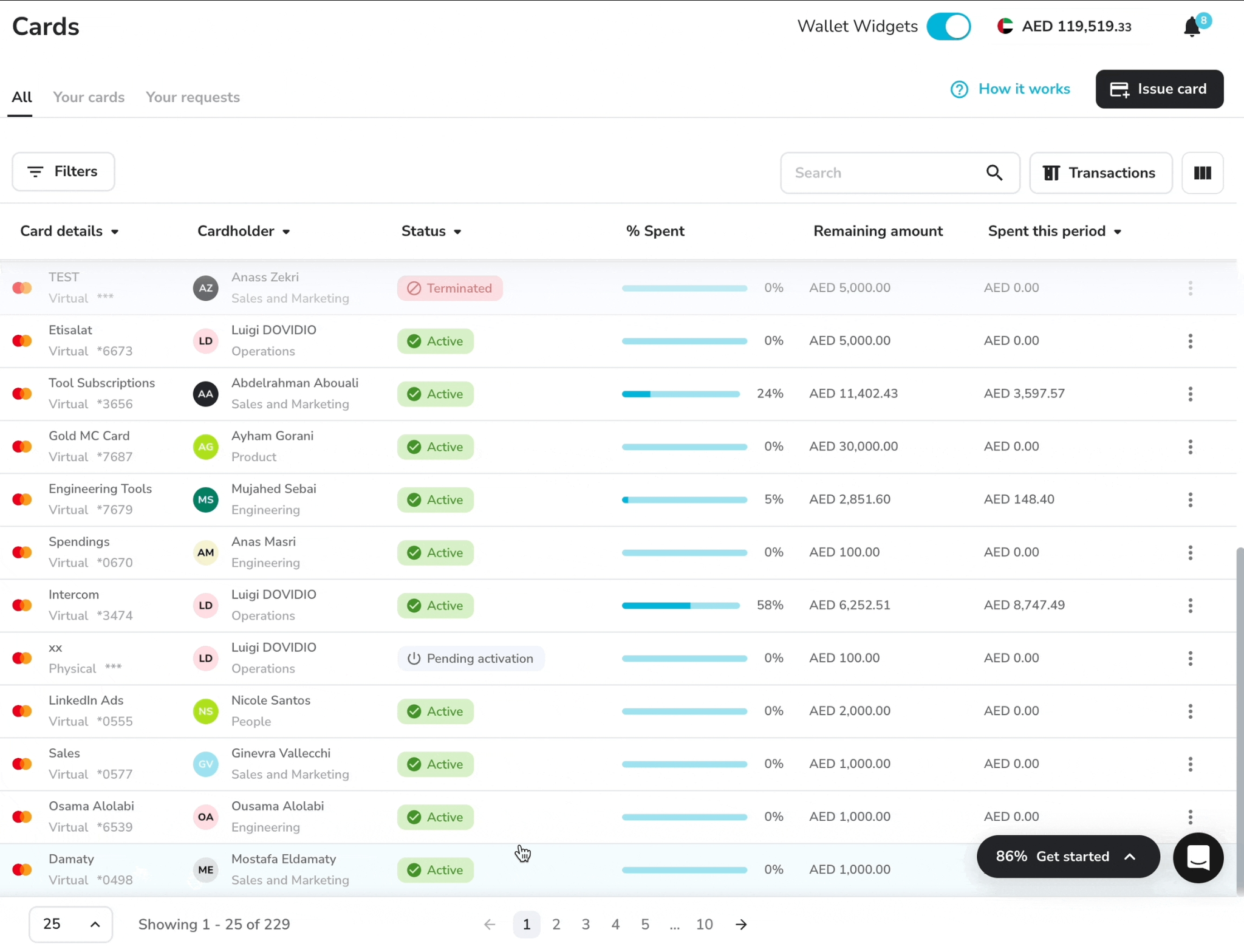
The policy literally becomes the card.
A booking that breaks the rules simply declines, so the awkward moment happens at the till and never reaches your month-end.
Virtual cards make the one-off bookings painless.
With Pemo, you can spin up a single-use card for a prepaid hotel or flight booking, run the charge once, and it's dead the moment the booking clears.
No card details doing the rounds and no mystery renewal turning up six months later.
Our virtual cards have no issuance cap, which makes them useful for online subscriptions, ad spend, or one-off vendor payments.
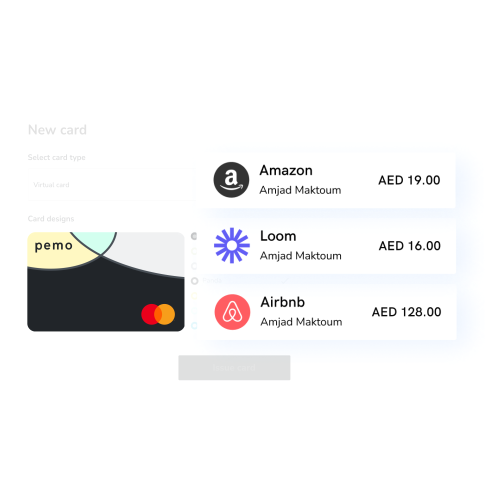
Pemo cards’ control layer is what makes the expense report unnecessary:
- You’ll be able to set spending caps per transaction, day, week, month, or year on any card.
- Restrict cards to specific merchant categories, such as hotels.
- Lock a card to a single vendor (e.g., Hilton) so it only authorises that supplier.
- Issue single-use virtual cards with a preset amount that get cancelled automatically after one transaction.
- Freeze any card from the dashboard in two taps if it's lost or compromised.
How do you track and reconcile travel expenses in real time?
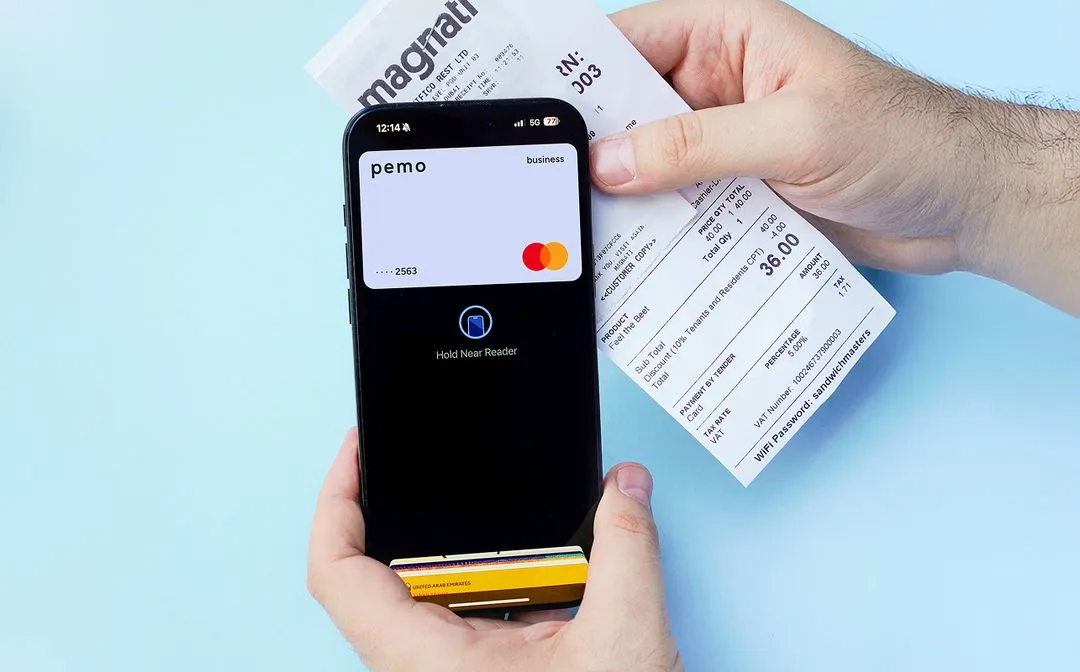
Real-time tracking with a platform like Pemo means each transaction and its receipt get captured the second they happen, while the trip is still in motion.
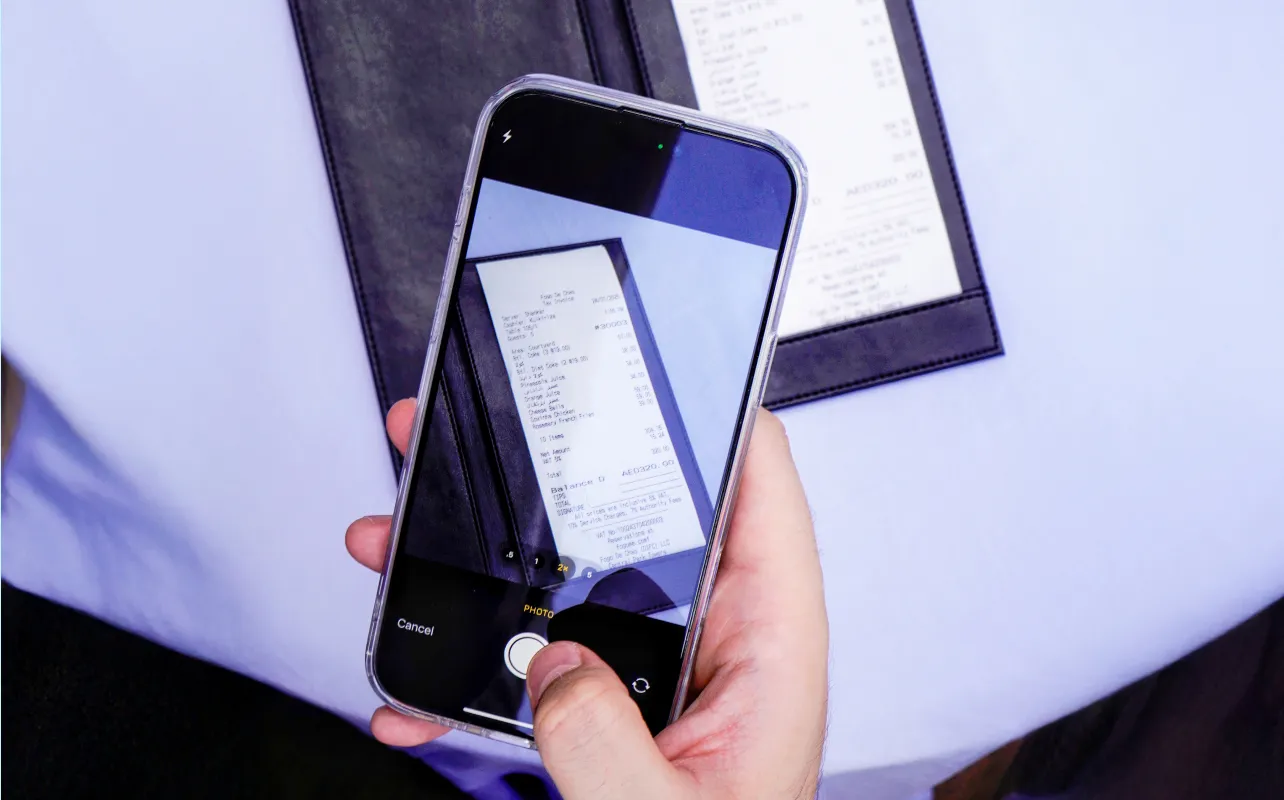
When the spending runs on a connected card, every purchase shows up immediately.
The traveller gets a prompt to photograph the receipt, the amount is already logged, and the two get matched on their own.
Finance can watch the trip add up live, broken out by employee and by category, while the person is still away.
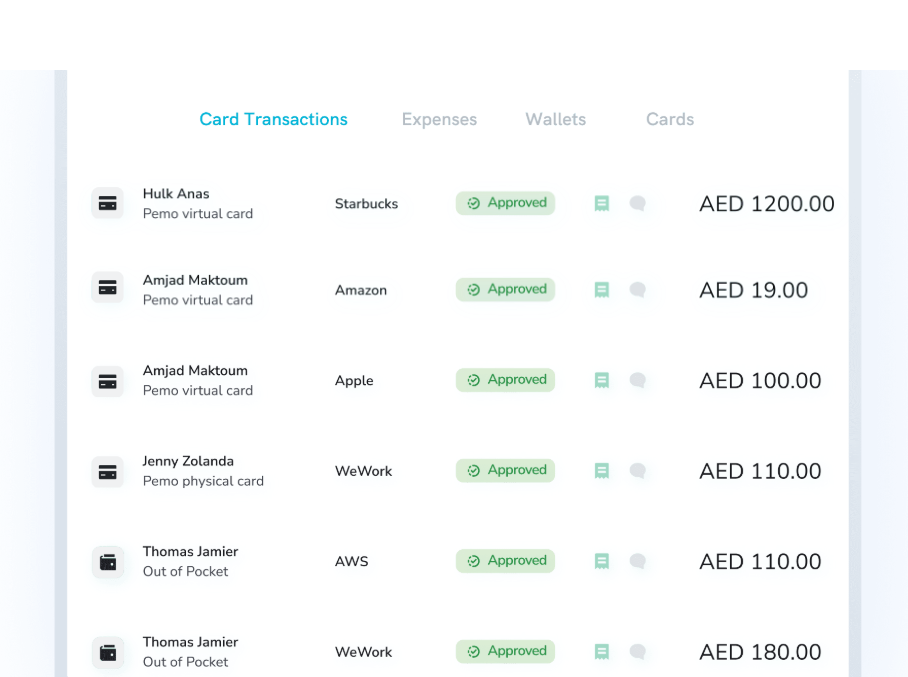
That changes the month-end job from forensic reconstruction into a quick sign-off.
By the time finance opens the books, the data is clean already, with categories assigned, receipts matched, and very little left to chase.

Cash and personal-card costs still happen, of course.
A taxi paid in dirhams from someone's pocket, a tip, the odd booking on a personal card when there was no alternative.
Those get logged as out-of-pocket items for tracking, with a photo of the receipt attached, so the trip stays complete even when a payment never went through a company card.
Sign Up For Pemo For Free
Pemo offers an all-in-one expense management software for SMEs and growing businesses in the UAE, with pre-loaded corporate cards that turn every transaction into a tracked, categorised, audit-ready expense.
Our cards and software work together so your team stops chasing receipts, month-end reconciliation moves much faster, and your spending stays inside the rules you set before anyone swipes a card.
If you're looking for expense management software with smart corporate cards for your UAE-based team that offers:
- AI receipt matching and real-time spend visibility.
- Direct sync with QuickBooks, Xero, Zoho Books, Wafeq, and Tally.
- Cashback on Google Ads, Meta Ads, and FX fees.
- Pricing in AED that starts at 29 a month.
Then you can sign up for the free Kickoff plan or book a demo to see why over 10,000 businesses across the MENA region run on Pemo.
⚠️ Disclaimer: This article was last updated on the 19th of June, 2026, and if there's any misinterpretation of the information, please contact us, and we will fact-check it. This is not legal or accounting advice, so always consult with a qualified professional before making decisions.
Frequently Asked Questions
What should a UAE business travel expense policy include?
At a minimum, it should name the costs you'll cover, the limit on each one, and the person who approves trips and claims.
You want to put real figures against hotels, meals, flights, and transport, and spell out what falls outside the policy, like personal entertainment.
The clearer those limits, the less your finance team has to negotiate after the fact.
Are business travel expenses tax-deductible in the UAE?
Costs incurred wholly for business are generally deductible for UAE corporate tax, while any personal portion is not.
One thing to watch: client entertainment and hospitality, including a client dinner on the road, is capped at a 50% deduction.
Keep the documentation tidy and the business purpose clear, and check the specifics with a tax advisor, since situations vary.
What's the simplest way to track employee travel spend?
The easiest way to track employee spending during travel is to use connected corporate cards, so every transaction and receipt is captured automatically as it happens.


